Posts Tagged ‘Google’

Adwords Text Ad Composer Gadget: Eventually An Adwords Tool?

October 30, 2008

iGoogle has a large number of gadgets available for use within iGoogle accounts.

Google account holders can search for gadgets to add to their iGoogle home page from ten different categories.

Google gadget categories to select from:

* News
* Tools
* Communication
* Fun & Games
* Finance
* Sports
* Lifestyle
* Technology
* Politics

…and the newest Gadget category: * Editor’s picks.

I focus on several areas of interest while working online and I have used Google’s gadget search to locate gadgets for making my work easier.

A search for gadgets under Adwords produces four page of results.

I found an Adwords gadget I like and recommend called the Adwords Composer Tool.

Search For Gadgets Adwords

Search For Gadgets Adwords

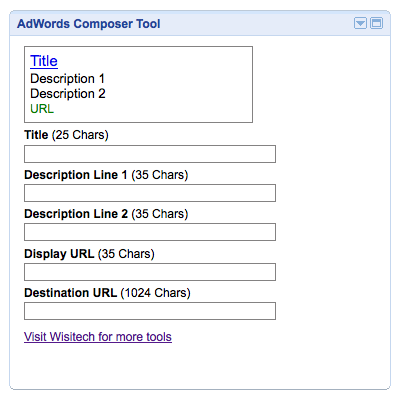
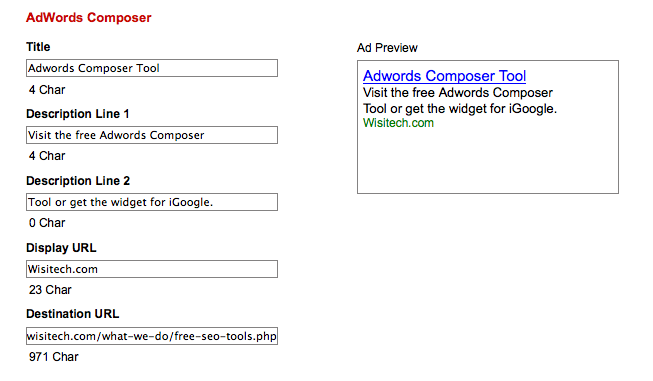
Once added to your iGoogle page, Google users can create and then test whether or not their Adwords ads meet Google text ads maximum characters per line criteria.
Adwords Widget

Adwords Widget

Each line of Google text ads allows the following maximum number of characters:

Ad Title: 25 characters

Ad Description Line 1: 35 characters

Ad Description Line 2: 35 characters

Ad Display URL: 35 characters

Ad Destination URL: 1,024 characters

With the Adwords Gadget, Adwords advertisers can compose mock ads without having to log in to their Google Adwords account.

It would be great if Google would add an ad composition tool to their set of Google Adwords Tools and then make it available externally like they when they created their “Adwords External Keyword Suggestion Tool“.

Until then, this Adwords ad composer gadget from Wisitech will do.

Adwords advertisers can also go to Wisitech’s web site to use the tool if they prefer.

Adwords Composer

Adwords Composer

Search Gadgets to add the Adwords Composer tool to your iGoogle account or visit Wisitech.com to find their Adword text ad composer tool along with the several other Adwords tools they offer.
Adwords Ad Composer Tool
Adwords Ad Composer Tool

Google Zeitgeist: Is Reverse Polling As Good At Predicting The Next President of the United States As Traditional Pollsters?

October 23, 2008

If you haven’t visited Google’s Zeitgeist recently, it now invites visitors to “take a look inside the world of search” via one of Google’s four search tools: Google Trends, Trends for Websites, Insights for Search and Hot Trends.

According to Google, “Zeitgeist” means “the spirit of the times”.

Google’s search tools reveal “the spirit of the times” through the aggregation of millions of search queries Google receives every day.

Isn’t the data Google culls from millions of search queries and their resulting Zeitgeist’s “spirit of the times” in effect – Reverse Polling?

Granted; searches for presidential candidates aren’t necessarily purchase proxies like those inherent in transactional related searches – or are they?

Through our votes aren’t we buying one candidate instead of another and then paying for both the newly elected and their predecessors’ policies via local, state and federal tax code?

Maybe one day we can shop for and elect officials online, but until then – we will have to settle for searching a candidates’ “product” features and benefits via all the various media available online including news, blogs and candidate websites.

Thus and barring concerns about the US Economy, few other topics symbolize the spirit of the times more here in the US than the upcoming United States Presidential election.

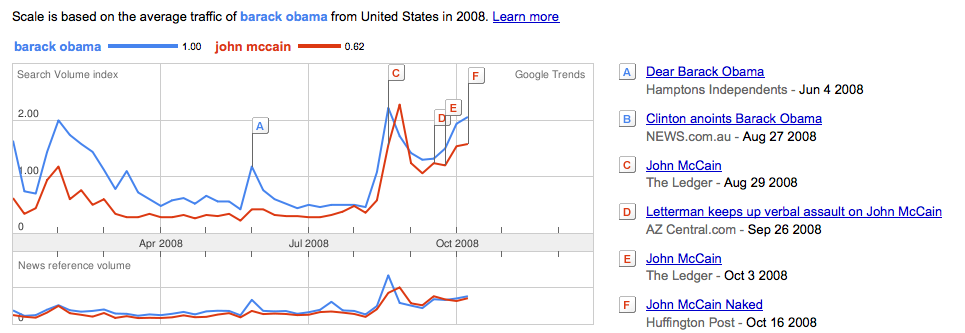
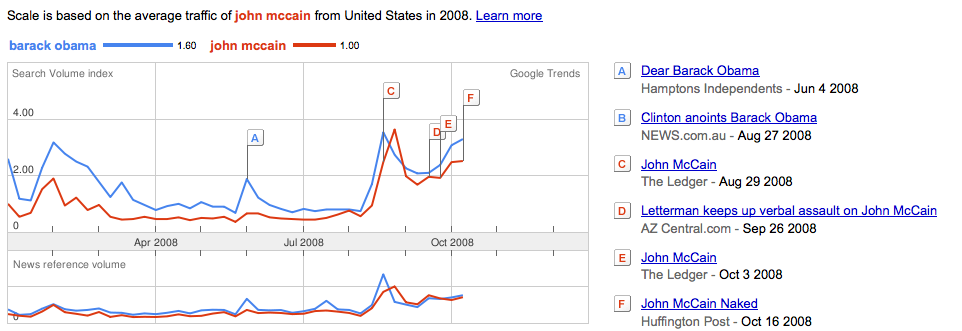
In keeping with the spirit of the times, below are two Google graphs illustrating how often each presidential candidate’s name has been searched compared to the other candidate with the difference calculated in ratios.

Barack Obama Searches

Barack Obama Searches

According to this Google graph, John McCain receives .62 searches for every Barack Obama search.

John McCain Searches

John McCain Searches

The same search data explained another way shows Barack Obama receives 1.62 searches for every search John McCain receives in Google.

Yesterday, the Wall Street Journal published their most recent presidential poll which has a graph that somewhat resembles Google search data for both candidates.

Wall Street Journal Poll

Wall Street Journal Poll

Further Google tool research for both candidates websites even more closely mirrors the recent Wall Street Journal presidential poll results.

BarackObama.com JohnMcCain.com

BarackObama.com JohnMcCain.com

Google search data indicates BarackObama.com has received 1 search for every .32 JohnMcCain.com searches.

And again – the search data appears to closely mirror the Wall Street Journal presidential poll findings.

BarackObama.com Searches

BarackObama.com Searches

The same search data presented for McCain searches shows JohnMcCain.com receives one search for every 3.2 BarackObama.com searches.

JohnMcCain.com Searches

JohnMcCain.com Searches

Have not Voters’ presidential candidate preferences already manifested in Google search data?

If so, what search factors potentially skew the predictive qualities of Google data?

In my next “Google Presidential Poll” post, I will take a crack at answering the above questions while also delving more deeply into where and how voters’ presidential candidate preferences have already materialized in Google search data as well as provide additional reasons why I think Google data has reached parity with traditional pollster data – at least on the national level.

Firefox Beta 3.1, Google Search and Poll Daddy

October 15, 2008

I have downloaded and started using Firefox Beta 3.1 and I’ve immediately noticed some new features.

Search terms are now highlighted in search results pages.

Google 3.1b1

Google 3.1b1

This feature highlights searched for terms in bold wherever they appear within the search results page.

By reducing the eye focusing labor required in the browsing process, Firefox Beta 3.1 makes searching for and finding what you are looking for much easier.

Search terms are highlighted in search results within Google, Yahoo, MSN and Ask.

I haven’t yet checked site search or any other search engine.

Firefox 3.1b1

Firefox 3.1b1

In Firefox 3.1, when a RSS is available from a particular site, the RSS icon is displayed in the far right end of the address bar.

Displaying the RSS button in the address bar makes subscribing to any web site’s feed far easier than hunting down the RSS button within a particular site.

Firefox Beta 3.1 Address Bar RSS

Firefox Beta 3.1 Address Bar RSS

RSS feed sources aren’t often easily located through a site’s internal search.

If I haven’t been able to locate a site’s syndication button from within a couple of clicks of a site’s home page, I will search Google for RSS XML and the domain name or business publication I want a subscription to.

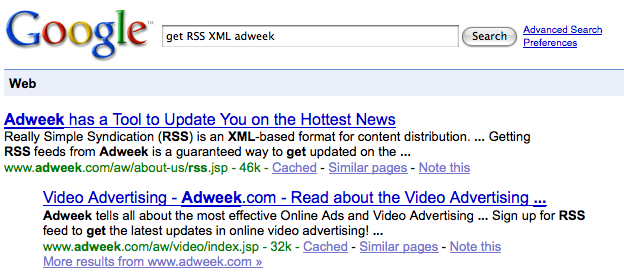
The Google search query looks like this: “get RSS XML Adweek”

Google Search RSS XML

Google Search RSS XML

This type of search query will usually produce the RSS feeds page address – if there is one – within the first two search results for any web site – large or small.

Firefox Beta 3.1 new features make browsing more intuitive and working online more efficient.

Take the Firefox Beta 3.1 poll with the new WordPress Poll Daddy polling tool:

Targeting iPhone Users with Google Adwords

October 9, 2008

Adweek reports Google has had discussions with ad agencies regarding advertisers targeting their ads to iPhone users specifically via Google Adwords.

While in Utah yesterday, my fly fishing guide Justin Harding and I noticed when using Google search from his iPhone Google Adwords advertising was sparse.

Initially, I thought it was because of the type of search we had ran.

However, after further investigative searches under highly competitive and advertised keywords, we weren’t ever able to see Adwords sponsored links on the right rail – only above the first search result.

Can a iPhone Google search display more than two Adwords advertisers ads as is now?

We weren’t able to generate any.

How is Google parsing iPhone search ads results for display? If they are, is Google distributing advertising to the iPhone with the same formula they use for displaying search results elsewhere?

Are iPhone screen real estate limitations the reason why we could only get two ads?

Even when we rotated the search results screen for horizontal viewing – under a Google search term that would typically have had up to ten sponsored links ( both above the search results and running down the right rail ) we were only able to generate two Adwords advertisers ads.

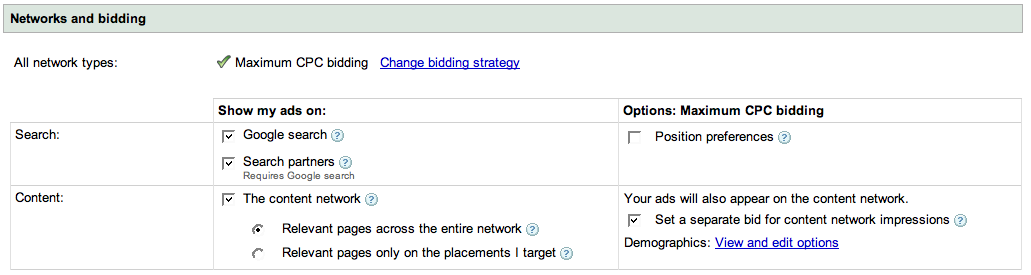
Will Google Adwords advertisers soon be able to select “iPhone” as a search distribution option along with “Google Search” and “Search Partners” within their campaigns Networks and bidding settings?

With 10 million iPhones in use and Apple’s iPhone supplying Google with its largest source of mobile search traffic, adding iPhone distribution to Google advertising campaigns will give Google Adwords advertisers another way to target and reach an increasingly mobile search audience.

Google Network Options

Google Network Options

One Google Search, Two YouTube Video Results

October 6, 2008

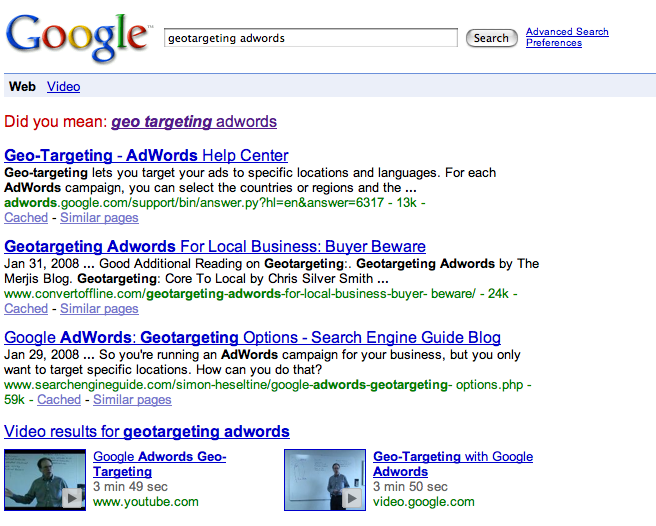
Google continues to experiment with universal search – displaying two videos side by side when queries have more than one relevant video result.

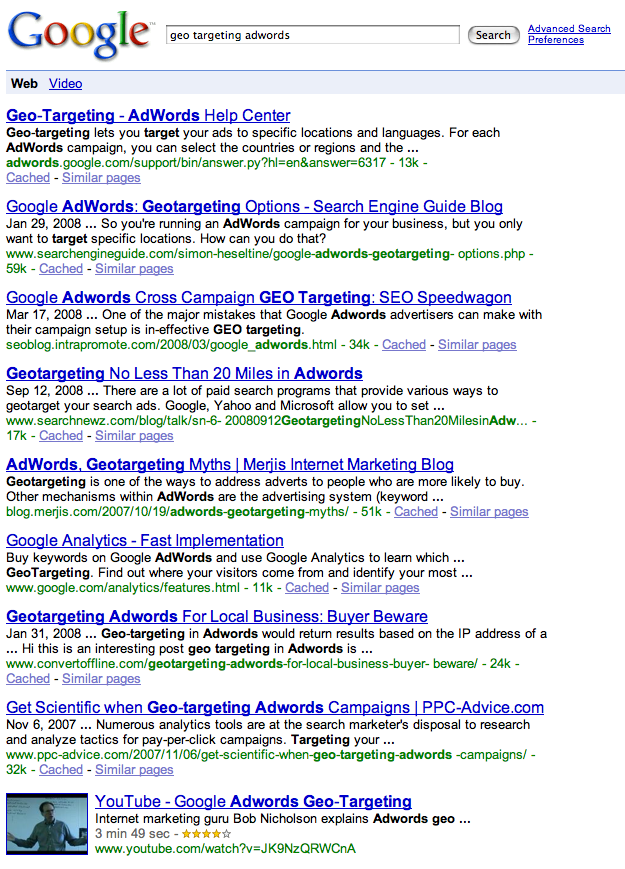
A search for “geotargeting adwords” produces the following search result:

Geotargeting Adwords Two Video Results

Geotargeting Adwords Two Video Results

Has Google determined this particular spelling of “geotargeting adwords” – as two words – warrants displaying two video results for any particular reason?

It appears so.

By placing the two video results horizontally, Google has also increased the total number of search results displayed for this particular search from ten results to eleven.

Yet, a search for “geo targeting adwords” – as three separate words – still continues to produce a single video link within Google’s universal search result – albeit much further down the page.

Any idea why the two word query generates two video results while the three word query gets just one?

Google Search Results One Video

Google Search Results One Video

Google Adwords Presentation: Jon M. Huntsman School of Business

October 2, 2008

I am giving a presentation on Google Adwords Oct 08-09, 2008 in Logan, Utah at Utah State University’s 18th Annual Customer Service & Marketing Seminar.

Customer Service Marketing Seminar

Customer Service Marketing Seminar

Utah State University’s Customer Service and Marketing Seminar is organized and produced by the University’s Partners in Business program at the Jon M. Huntsman School of Business.

I would like to thank Cameron Oliver for extending me an invitation to speak at his group’s event.

Partners In Business

Partners In Business

I accepted Cameron’s invitation to speak about Google Adwords in the Utah market for several reasons.

The determining factor which ultimately lead to my decision to agree to speak to a Utah audience about Google Adwords was of course – data from Google itself.

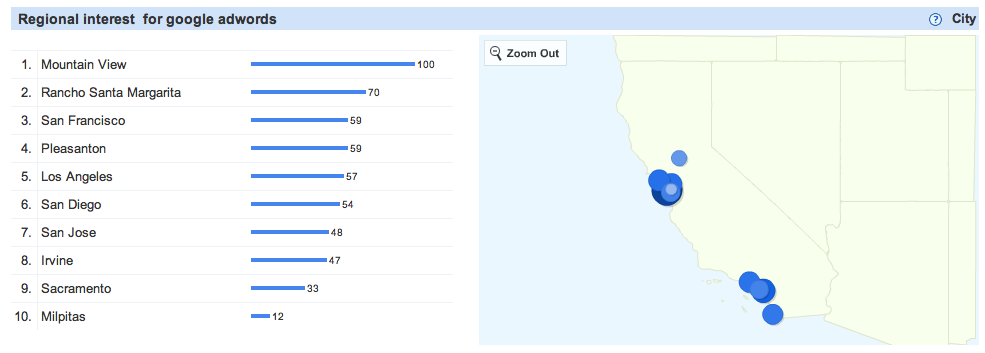
According to Google’s Search Volume Index, information about Google Adwords is sought by more searchers from Utah than from any US state other than Google’s home state of California.

Google Adwords Regional Interest

Google Adwords Regional Interest

As you can see, California scores a 100 in Google’s Search Volume Index for Google Adwords followed closely by Utah’s 93.

Google’s Search Volume Index tool also confirms search interest in the Google brand is highest in Mountain View, CA where Google has its headquarters.

Google Adwords California Search

Google Adwords California Search

Google’s Search Volume Index is an excellent tool for visualizing whether any market demand exists in any particular region of the world for products and services – or not.

Google data says people in Utah are interested in Google Adwords – so Utah – here I come!

I will be speaking twice at the Customer Service and Marketing Seminar on October 8th first at 9:45 and then again @ 2:30.

Customer Service Marketing Seminar Schedule

Customer Service Marketing Seminar Schedule

The title of my 50 minute presentation is: Google Your Business and Marketing!

Below is an overview of my presentation and the topics I plan to cover.

Overview:

Harness the power of Google to grow your business!

An increasing number of buyers are first turning to Google to research products and services before they purchase.

Make sure your business comes up in Google when searchers are deciding where and who they should buy from.

This presentation will show both small and medium size businesses how they can implement Google-specific search engine marketing and optimization techniques to get more buyers, larger sales more often.

Learn how to:

Target your prospects online instead of off-line for measurable results.

Transform your business into a modern marketing machine.

Speak with your customers in their language, the language they understand and prefer.

Tap Google Adwords to reach your prospects when and where they want to be reached.

Acquire new business more rapidly and efficiently through marketing on Google.

Reduce your customer acquisition and retention cost.

I am looking forward to speaking about Google Adwords and presenting “Google Your Business and Marketing” at Utah State University’s 18th Annual Customer Service & Marketing Seminar.

Google Adwords Reports and Quality Score Management

September 25, 2008

With Google having added numeric quality scores ranging from 1 to 10 within all Adwords advertisers accounts, an entirely new level of performance data has become available to paid search managers.

Will Google Adwords Quality Score Management soon follow?

Presently, Adwords provides advertisers with ten different types of account performance reports.

The ten types of Google Adwords reports along with their attributes are:

1. Keyword Performance: Performance data for all keywords or those in selected campaigns.

2. Ad Performance: Performance data for each of your ads

3. URL Performance: Performance data for each of your Destination URLs.

4. Ad Group Performance: Ad group performance data for one or more of your campaigns.

5. Campaign Performance: Performance data for your campaigns.

6. Account Performance: Performance data for your entire account.

7. Demographic Performance: Performance data for sites by demographic.

8. Geographic Performance: Performance data by geographic origin.

9. Search Query Performance: Performance data for search queries which triggered your ad and received clicks.

10. Placement Performance: Performance data for placements where your ad was placed.

Adwords Quality Score Report Type

Adwords Quality Score Report Type

These ten types of Google Adwords reports provide valuable and actionable Adwords account performance data paid search managers require for making informed adverting purchasing decisions.

Reports are available in daily, weekly and monthly intervals.

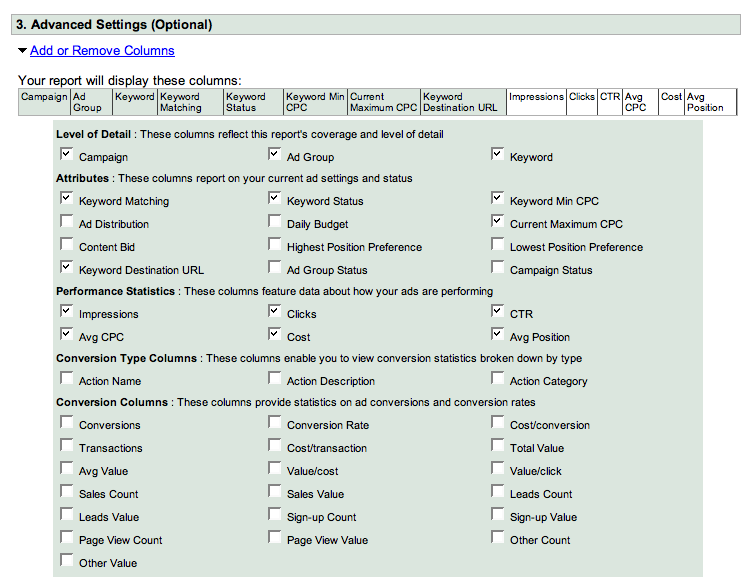
With the Adwords reports advanced settings option, advertisers can receive an even greater degree of account performance details.

Additional attributes available from the advanced settings reports include performance statistics, conversion types and detailed conversion data.

Adwords Quality Score Advanced Settings

Adwords Quality Score Advanced Settings

With the advent of their Adwords numeric quality score, Google has now denominated the level of advertising performance it requires from advertisers.

Additionally, Google has given their advertisers a new tool for further identifying, managing and improving ad and keyword performance.

In exchange for their new advertising quality measurement tool, Google will ultimately get improved advertising quality.

As far as I know, the numeric quality score is the first metric Google has made public to either its publisher or advertiser community that can be measured against and thus managed to.

The numeric quality score is yet another milestone on Google’s road to further transparency with its advertisers.

At some point, will Google provide Adwords Quality Score reporting options to its advertisers too?

By providing advertisers with Quality Score reporting, advertisers will then have an another set of important data for further managing and improving the performance of their ads and keywords.

By making Quality Scores available in Adwords reports, Google would initialize the Adwords Quality Score Management process.

Microsoft adCenter: No Cost Per Conversion Data

September 15, 2008

Is there a particular reason why the Microsoft adCenter doesn’t provide a cost per conversion column for its advertisers?

Microsoft adCenter Cost Per Conversion

Microsoft adCenter Cost Per Conversion

The Microsoft adCenter dashboard displays ad group name, ad group start date, ad group end date, status, spend, impressions, clicks, ctr %, average position, conversions, average cpc and negative keywords.

adCenter data does show number of conversions – just not their cost. This unnecessarily creates an extra level of interpretation and work for advertisers.

Why?

If an advertiser wants to manage and understand their advertising campaign’s effectiveness through cost per conversion data – Microsoft through its omission of this metric – leaves advertisers to make their own calculations… or not.

Is this a lack of transparency in Microsoft’s adCenter?

If it is, Microsoft’s not providing its advertisers with acquisition cost data makes calculating their return on investment more difficult.

Both Google and Yahoo supply this type of data.

Surely this is just an oversight on Microsoft’s part.

If it is an oversight, adding cost per conversion data in the Microsoft adCenter dashboard would help Microsoft’s advertisers understand more about their campaigns acquisition costs and in turn their return on investment from advertising with Microsoft.

Surely providing this data in column form would be in the best interest of both Microsoft and its advertisers.

Google Knows Everything or Just Enough?

September 9, 2008

From the Official Google blog yesterday:

“Today, we’re announcing a new logs retention policy: we’ll anonymize IP addresses on our server logs after 9 months. We’re significantly shortening our previous 18-month retention policy to address regulatory concerns and to take another step to improve privacy for our users.”

“Although that was good for privacy, it was a difficult decision because the routine server log data we collect has always been a critical ingredient of innovation. We have published a series of blog posts explaining how we use logs data for the benefit of our users: to make improvements to search quality, improve security, fight fraud and reduce spam.”

“While we’re glad that this will bring some additional improvement in privacy, we’re also concerned about the potential loss of security, quality, and innovation that may result from having less data.”

From these comments, can we infer search quality, innovation, searcher privacy and security are built on having the most search data?

What impact can anonymized data have when you still control it?

eBay Being Distintermediated by Google?

August 21, 2008

“eBay will be permanently marginalized by Google.” – Inspired by Erick Schonfeld, TechCrunch

via FastCompany:

“Although eBay is making changes to its fee structure – emphasizing fixed prices over the auction model it’s known for following, Schonfeld writes, “the Web has moved on and eBay is stuck in still waters.” Page views are down 15% year-over-year, while the stock is down 26%.

eBay’s main challenge, he says, “is that it is becoming easier and easier to find things to buy on the Web simply by searching for what you want on Google. During the early days of the Web, people needed a few big e-commerce sites they could trust and that could organize everything that was for sale online. That need was filled by Amazon and eBay. But now people are comfortable trawling the Net for the best bargains, and eBay is no longer the first place they go.”

Just as the tens of thousands of middle men and their companies like travel agents were disintermediated  by Web 1.0, eBay who became the middle man for millions of buyers and sellers now faces being disrupted itself by the web’s largest middle man: Google.

Why go to eBay and pay their toll when you can go direct to any seller via a Google search – toll free?