Archive for October, 2008
October 14, 2008
Predicted growth in advertising spend per media for 2009 from Wachovia via the Wall Street Journal:
Growth of total U.S. advertising -0.8%
Internet +10%
Yellow Pages +6.3%
Cable TV +4.0%
Billboards +3.0%
Magazines -2.0%
Broadcast TV – 2.7%
Cable -4.0%
Radio -4.8%
Newspapers -9.8%
Don’t these ad growth – or lack thereof – predictions represent each specific media’s ability to reach, target and hold its audience’s attention?
When the overall economy contracts, aren’t general media those who first experience a contraction in their audience’s attention?
When media loses it’s ability to hold its audience’s attention doesn’t it soon thereafter lose advertiser support as well?
Tags:2009 Ad Spending Forecast, Billboards, Broadcast TV, Cable TV, Internet, Magazines, Media Attention Deficit, Newspapers, Radio, Yellow Pages
Posted in Ad Spending Forecast, Advertising, Broadcast TV, Cable TV, Internet, Magazines, Media Attention Deficit, Newspapers, Radio, Yellow Pages | Leave a Comment »
October 13, 2008
comScore has released a study which shows the top 10 pharmaceutical brand web sites by unique visitors.
Their study compares website traffic changes from Q2 2007 to Q2 2008.
Nexium was marketed more heavily during the quarter – running twice as much display advertising over its two closest competitors.
This tactic appeared to vault Nexium (purplepill.com) into the top most visited drug brand name web site position during the second quarter of 2008.
Collectively, the top 10 most visited drug brand name websites during the second quarter of 2008 received 6,394,000 unique visitors compared to the second quarter of 2007 where the same group of drug brands received 5,294,000 unique visitors.

Top 10 Brand Name Drug Websites
Tags:Display Advertising, Drug Brands, Nexium, Purplepill.com
Posted in Display Advertising, Drug Brands | Leave a Comment »
October 12, 2008
In a previous post I wrote about the differences I found between the four major search engines Google, Yahoo, MSN and Ask and their search advertising geo-targeting options.
I stated Microsoft didn’t offer geotargeted search advertising options to its advertisers.
However, Dave Naffziger pointed out Microsoft AdCenter’s geotargeting features can be found under the “edit ad group settings” instead of the “edit campaigns settings” like in Google, Yahoo and Ask.
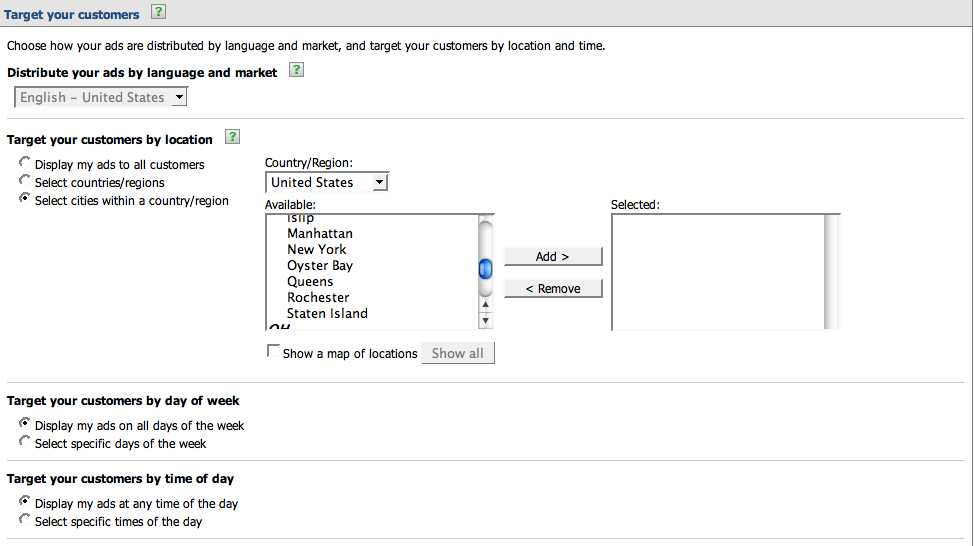
The following are screen shots of Microsoft adCenter’s geotargeting capabilities:
Like with other search advertising platforms, Microsoft ads can be targeted by country or region and then targeted specifically to cities within a region.

Microsoft Adcenter Geotargeting
Although Microsoft lists all countries worldwide available for targeting, only five countries can be selected for geo-targeting search advertising through Microsoft’s adCenter at this time.
The five countries are:
The United States, Canada, United Kingdom, France and Singapore.
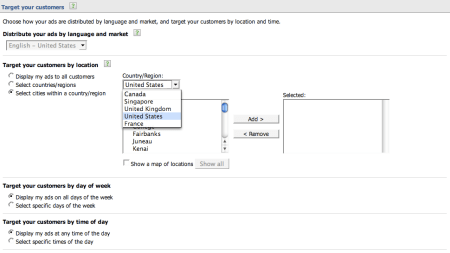
Microsoft Adcenter Country Targeting
Once a country or region has been selected, advertisers can select a limited number of cities within each state to distribute their ads to.
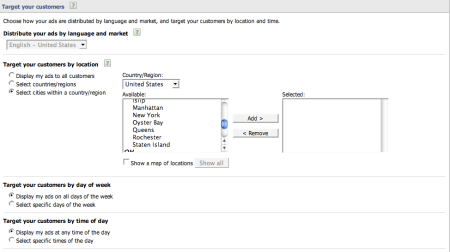
Microsoft Adcenter Ad Group Geotargeting
Advertisers can’t target their ads specifically for distribution at the state level like they can in Google, Yahoo and Ask.

Microsoft Adcenter Geotargeting States or Cities
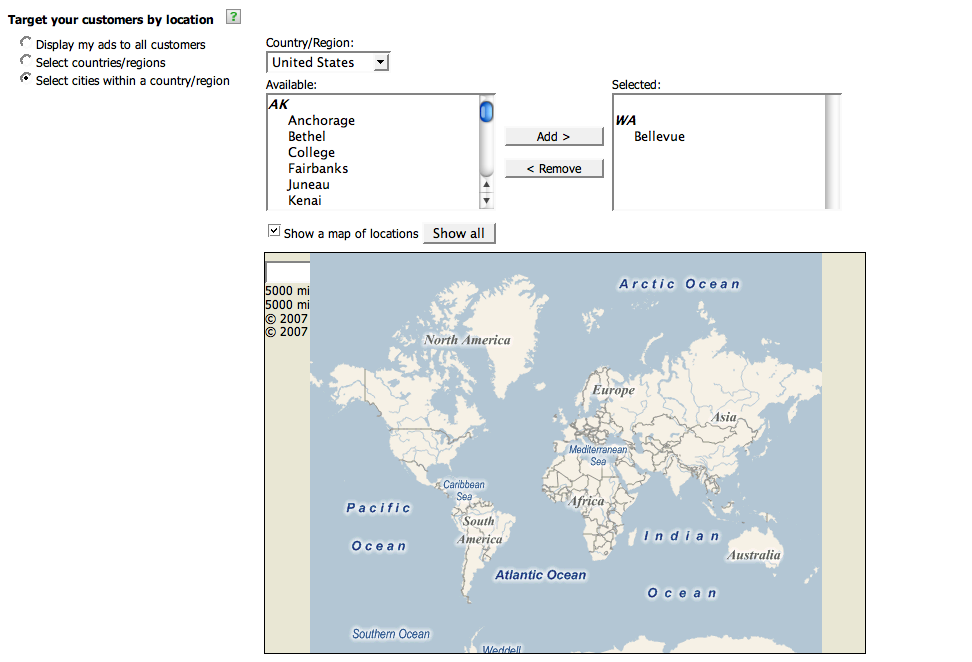
Once a city or cities have been selected for geotargeted search advertising, adCenter then provides a map of the targeted area.

Microsoft Adcenter Geotargeting Bellevue WA
I haven’t yet been able to get the adCenter map to display any of the locations of my geotargeted ads.
adCenter search advertising features still require further development before they will match the features and functionality already available from the other three major search advertising providers.
Tags:Ad Groups, Campaigns, Geotargeting, Microsoft adCenter, Search Advertising
Posted in Ad Group, Advertising, Geotargeting, Microsoft adCenter, Search Advertising, Search Engine Advertising | Leave a Comment »
October 11, 2008
I was giving a presentation in Utah last week using Google Local Search and Google Maps as examples which evidently included new distribution points for Adwords advertising.
In the examples below, you can see an Adwords ad displayed in two locations in both types of Google Maps products being searched.
A search for Trump Soho Hotel in Google Maps produces two Adwords advertisers ads – one in the top left corner above Google’s local search results with the other ad below the map itself.

Trump Soho Hotel Google Maps
The same search in Google Street View also generates two Google Ads in the same locations as in the Google Map view search.
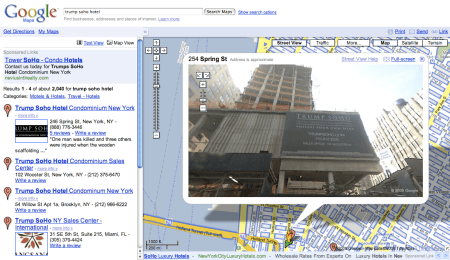
Trump Soho Hotel Google Maps Street View
Its not clear to me as a Google Adwords advertiser just how I can get my ads distributed and displayed in these local map search results.
None of my geo-targeted Adwords campaigns are generating these types of ad distribution results.
Tags:Adwords, Geo-Targeted, Google Maps, Google Street View, Local Search
Posted in Google, Google Maps, Google Street View, Local Search | Leave a Comment »
October 10, 2008
Google has started delivering customized search results for local searches.

Customized Search Results
How does Google decide which queries are getting which area’s results?
If I were to venture a guess, I would say they will begin distributing search results within a scheme similar to Nielsen’s Designated Market Areas (DMA).
The timing for this new type of search result appears to coincide with the present United States economic cycle.
More about Google’s new customized search results:

Search Customization Details
Search Customization Details
Tags:Customized Search Results, Designated Market Areas, DMA, Nielsen, Search Customization
Posted in Advertising, Designated Market Areas, DMA, Google, Local Search, Nielsen, Search Results | Leave a Comment »
October 9, 2008
Adweek reports Google has had discussions with ad agencies regarding advertisers targeting their ads to iPhone users specifically via Google Adwords.
While in Utah yesterday, my fly fishing guide Justin Harding and I noticed when using Google search from his iPhone Google Adwords advertising was sparse.
Initially, I thought it was because of the type of search we had ran.
However, after further investigative searches under highly competitive and advertised keywords, we weren’t ever able to see Adwords sponsored links on the right rail – only above the first search result.
Can a iPhone Google search display more than two Adwords advertisers ads as is now?
We weren’t able to generate any.
How is Google parsing iPhone search ads results for display? If they are, is Google distributing advertising to the iPhone with the same formula they use for displaying search results elsewhere?
Are iPhone screen real estate limitations the reason why we could only get two ads?
Even when we rotated the search results screen for horizontal viewing – under a Google search term that would typically have had up to ten sponsored links ( both above the search results and running down the right rail ) we were only able to generate two Adwords advertisers ads.
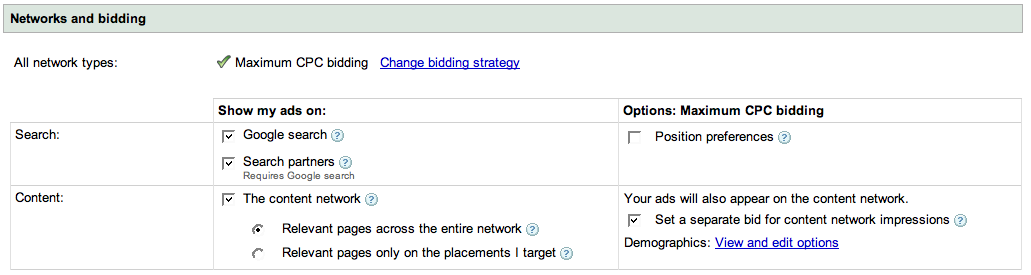
Will Google Adwords advertisers soon be able to select “iPhone” as a search distribution option along with “Google Search” and “Search Partners” within their campaigns Networks and bidding settings?
With 10 million iPhones in use and Apple’s iPhone supplying Google with its largest source of mobile search traffic, adding iPhone distribution to Google advertising campaigns will give Google Adwords advertisers another way to target and reach an increasingly mobile search audience.
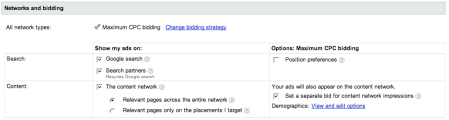
Google Network Options
Tags:Ad Agencies, Advertisers, Advertising, Adweek, Apple, Google, Google Adwords, iPhone, Mobile Search, Mobile Search Traffic, Search Audience, Search Distribution, Search Network, Search Results
Posted in Advertisers, Advertising, Google, Google Adwords, Google Search, iPhone, Mobile Search, Mobile Search Traffic, Search Audience, Search Distribution, Search Network, Search Results | 1 Comment »
October 8, 2008
With the current level of economic uncertainty, more consumers are turning to the web for grocery coupons, food coupons, free coupons and printable coupons particularly from grocery stores like Kroger, Safeway and of course Walmart.
While looking for different coupon information resources, I stumbled across the CouponMom.com web site.
Couponmom.com provides grocery deals by state, printable grocery coupons, free printable coupons, free grocery coupons, restaurant coupons and online coupon codes among a host of other coupon related information.
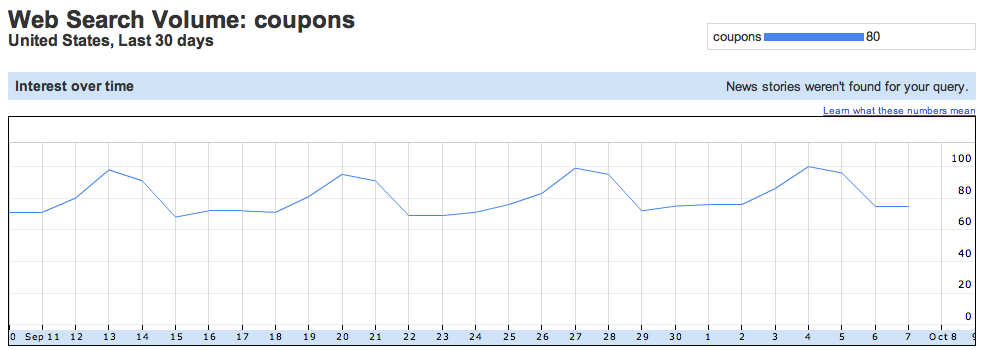
While seeking further insight into consumers search for coupons online, I noticed a pattern in coupon search data I thought was interesting – Saturdays are the day when search queries peak for coupons week in and week out.

30 Day Coupon Search Pattern
In the above example, September 13, September 20, September 27 and October 4 were the days where search for coupons was the greatest – all Saturdays.
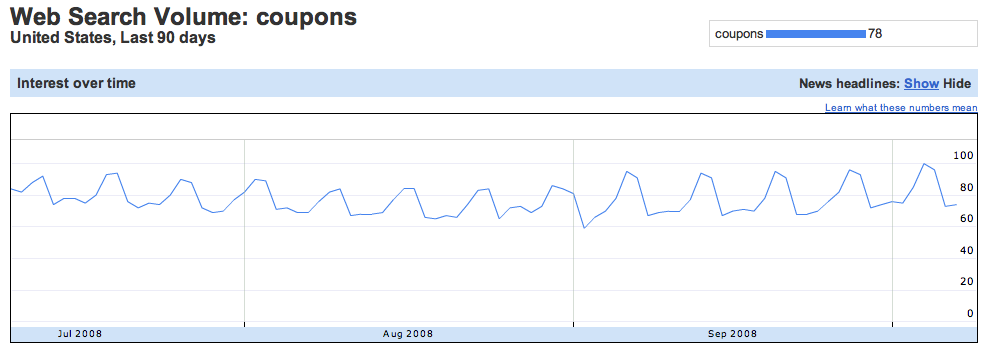
The following pattern holds true over a 90 day time period as well.

90 Day Coupon Search Pattern
If your business is in the business of coupons, Saturday is coupon day – week after week.
Tags:Couponmom.com, Coupons, Food Coupons, Free Coupons, Grocery Coupons, Kroger, Online Coupons, Printable Coupons, Safeway, Walmart
Posted in Coupons, Food Coupons, Free Coupons, Grocery Coupons, Printable Coupons | 2 Comments »
October 7, 2008
From the Wall Street Journal – Market researcher Taylor Nelson Sofres agreed Monday to be acquired by WPP Group for £1.1 billion ($1.95 billion).
With this acquisition WPP becomes the world’s largest marketing company overtaking Omnicom Group.
According to the WSJ: “Many research products, such as television ratings and retail market-share data, typically continue selling well even when advertising demand slackens.”
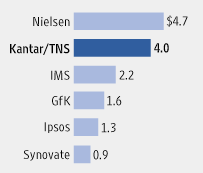
Now the top six market research firms worldwide and their revenues, in billions are:
Top 6 Market Research Firms
Nielsen $4.7
Kantar (WPP) / Taylor Nelson Sofres $4.0
IMS $2.2
GfK $1.6
Ipsos $1.3
Synovate $0.9
Tags:GfK, IMS, Ipsos, Market Research Firms, Nielsen, Synovate, Taylor Nelson Sofres
Posted in Market Research Firms | Leave a Comment »
October 6, 2008
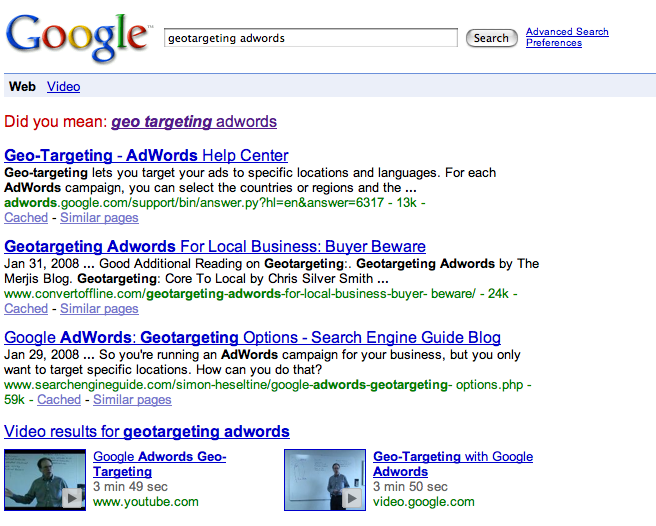
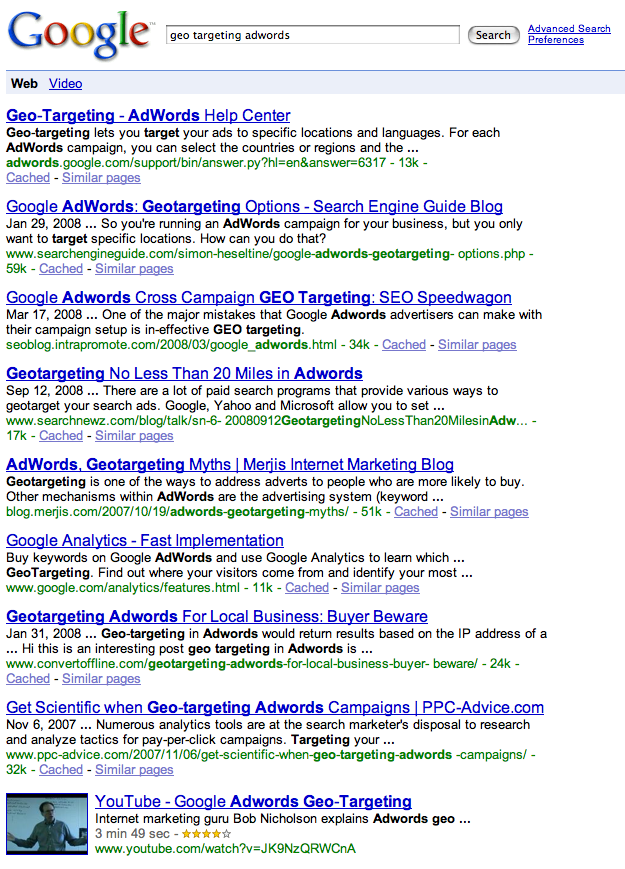
Google continues to experiment with universal search – displaying two videos side by side when queries have more than one relevant video result.
A search for “geotargeting adwords” produces the following search result:

Geotargeting Adwords Two Video Results
Has Google determined this particular spelling of “geotargeting adwords” – as two words – warrants displaying two video results for any particular reason?
It appears so.
By placing the two video results horizontally, Google has also increased the total number of search results displayed for this particular search from ten results to eleven.
Yet, a search for “geo targeting adwords” – as three separate words – still continues to produce a single video link within Google’s universal search result – albeit much further down the page.
Any idea why the two word query generates two video results while the three word query gets just one?
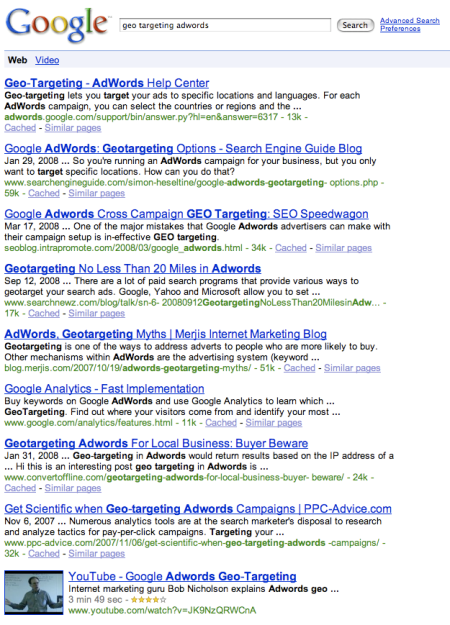
Google Search Results One Video
Tags:Google, Universal Search, Videos, YouTube
Posted in Google, Universal Search, YouTube | Leave a Comment »
October 4, 2008
There are many tactics search engine advertisers can use by design to either induce searchers to click or not click on their ads until after the ad viewer has self qualified their interest in the advertisers’ message.
Placing an offer’s price in the ad is one tactic often discussed.
Placing a lower price than other visible or known offers can reduce pay per click ad friction with its audience and tends to increase an ads click through rate. However, placing low prices in a pay per click ad doesn’t necessarily translate into more qualified searchers or buyers nor will it translate into high transaction volume.
Another tactic not mentioned as often is placing high price points in the pay per click ad which increases click friction. High price points within pay per click ads purportedly dissuades dis-interested and the budget conscious from clicking through to view the advertiser’s offer.
Today, I came across the most extraordinary example of an advertiser’s use of premium pricing to qualify search traffic I ever recall ever seeing.

Pay Per Click Friction
Theoretically, in this example placing their minimum annual fee requirements of $150,000 in the ad would create click friction and cause searchers unwilling to spend $150,000 a year to pass the ad over – thus sparing the advertiser unwanted clicks and costs from disinterested searchers.
However, by placing such a high barrier into their ad this particular advertiser will more than likely experience extremely low click through rates which in turn will create the ultimate form of pay per click advertising friction for instead – the advertiser… lower click through rates, lower ad quality score and ultimately an ad that requires higher bids just to be shown at all.
Will the above example prove to be a successful marketing strategy for the advertiser or will their ad’s premium pricing cause fewer clicks and lower click through rates – ultimately bringing their pay per click advertising campaign to a screeching halt?
Tags:Advertising Campaign, Click Through Rates, Marketing Strategy, Offer, Pay Per Click, Premium Pricing, Quality Score, Search Traffic, Self Qualified
Posted in Advertisers, Advertising, Advertising Campaign, Click Through Rates, Offer, Pay Per Click, Premium Pricing, Quality Score, Search Traffic | Leave a Comment »








 Search Marketing Communications
You must be logged in to post a comment.