Google Ad Manager Service

March 13, 2008

While Microsoft is still trying to get its arms around Yahoo and its share of the online search and display advertising market, Google has taken one step to closer to consolidation of the online advertising market with the recent EU approval of their DoubleClick acquisition.

With its acquisition of DoubleClick and its roughly 60% share of the online display advertising market, Google has now created a dominant market share position in both the online display and search advertising markets.

Google’s challenge now remains vertical integration in both markets – greater penetration of search advertising sales within the online brand advertising market and deeper penetration within the small to medium size publishing segment within the online display advertising market.

To achieve its objectives in the online display advertising market, Google has announced its new service called the Google Ad Manager.

From the official Google Blog:

Google Ad Manager is a free, hosted ad and inventory management tool that can help publishers sell, schedule, deliver and measure their directly-sold and network-based ad inventory. It offers an intuitive and simple user experience with Google speed and a tagging process so publishers can spend more time working with their advertisers and less time on their ad management solution. And by providing detailed inventory forecasts and tracking at a very granular level, Ad Manager helps publishers maximize their inventory sell-through rates.”

The Google Ad Manager will both allow the small to medium size publisher to greater optimize its advertising inventory yield through access to advertising inventory tools previously only available through DoubleClick while also furthering Google’s pursuit to better serve its primary market – small to medium size businesses – now through the small to medium size publisher.

The Google Ad Manager Service:

Google Ad Manager

Medicare Marketing Strategies

March 11, 2008

I am presenting a workshop on marketing Medicare through Google for World Research Group on March 31st in Washington DC.

The 2nd Annual Conference on Medicare Marketing Strategies covers Medicare product development – customer acquisition and retention strategies.

My presentation for marketing Medicare: Utilizing Search Engine Optimization and Incorporating Strategic Web-Based Services to Increase Market Share will begin at 9:30 a.m. and end at 12:30 p.m.

The following is an overview of the workshop.

Google Your Medicare Marketing

The new age senior is far more advanced and tech-savvy. Seniors are looking for their Medicare information online through Google every day.

Nearly a million seniors visit Medicare.gov’s web-site each month, yet only come away with unwieldy lists of their area plans. More often than not, all these shoppers were really looking for was a local agent they could trust to answer their Medicare questions.

Learn how to be reached by potential Medicare enrollees. Learn how to acquire these types of Medicare buyers through Google at the restricted time in which they are searching who to buy from.

During this informative, interactive workshop you will learn how to:

• Gain a competitive market advantage by pre-empting your competition through Google
• Acquire new business more rapidly and efficiently
• Reduce your marketing costs for retention

More information on the 2nd Annual Medicare Marketing Strategies Conference and my Utilizing Search Engine Optimization and Incorporating Strategic Web-Based Services to Increase Market Share workshop can be found at World Research Group.

I am looking forward to presenting this workshop on Medicare marketing in Washington DC on March 31st.

Google Analytics Map

March 5, 2008

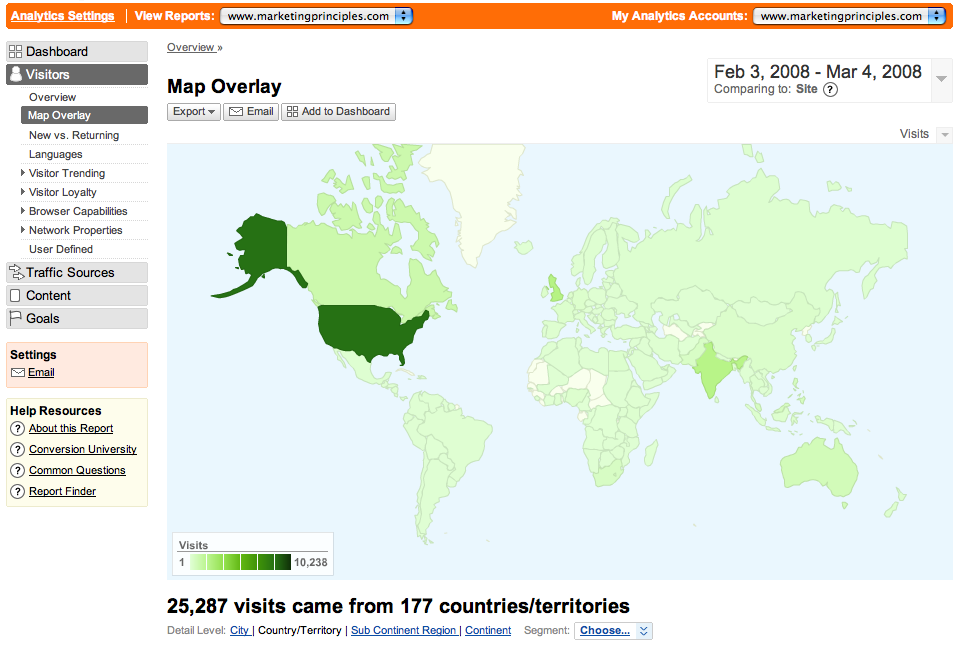
This Google Analytics Map screenshot shows how one of my sites has received 25,287 visits from 177 countries and territories from February 3 through March 4 2008.

The Google Analytics Map Overlay feature is one of many ways Google Analytics helps web site owners visualize and analyize web site performance.

Google Analytics Map

Google Adwords Sponsored Links Displaying Google Local Business Center Maps

February 29, 2008

Google Adwords Sponsored Links Local Maps

Originally uploaded by TimCohn

For the last nine months Google has been testing the display of Google Maps information in their Local Google sponsored links results.

Today I discovered my own local Google Adwords ad displaying both information about my business from Google Maps and from my Google Local Business Center account.

However, the Google Maps and Google Local Business Center information still aren’t appearing in all Google search results.

Search Engine Marketing Communications Survey

February 29, 2008

The following are some initial questions I ask potential clients when evaluating the search engine marketing potential of their business.

This multiple-choice Search Engine Marketing Communications Survey takes about two minutes to complete.

Download your copy of the Search Engine Marketing Communications Survey PDF.

What is your primary business?

A. Store-based merchant
B. Catalog
C. Virtual merchant
D. Consumer brand manufacturer

Which type of search engine marketing do you use the most?

A. More pay-per-click than organic
B. More organic than paid
C. Both equally

How does search engine marketing perform compared with your other marketing programs?

A. Better
B. Much better
C. Same
D. Worse
E. Much worse

How large is your keyword inventory?

A. Less than 50 words
B. 51 words to 100 words
C. 101 words to 200 words
D. 251 words to 500 words
E. 501 words to 750 words
F. 751 words to 1,000 words
G. 1,001 words to 5,000 words
H. 5,001 words to 10,000 words
I. More than 10,000 words

What percent of your online sales are attributable to search engine marketing?

A. 5% or less
B. 5.1% to 10%
C. 10.1% to 15%
D. 15.1% to 20%
E. 20.1% to 25%
F. 25.1% to 30%
G. 30.1% to 40%
H. 40.1% to 50%
I. More than 50%

What percent of shoppers who come to your site through your paid search program make a purchase?

A. 0.5% to 1%
B. 1.1% to 2%
C. 2.1% to 3%
D. 3.1% to 4%
E. 4.1% to 5%
F. 5.1% to 6%
G. 6.1% to 7%
H. 7.1% to 8%
I. 8.1% to 9%
J. 9.1% to 10%
K. 10.1% TO 15%
L. More than 15%

In the past year your pay-per-click conversion rate:

A. Went up
B. Went down
C. Stayed the same

By what percent did your pay-per-click conversion rate increase?
A. 2% or less
B. 2.1% to 5%
C. 5.1% to 6%
D. 6.1% to 7%
E. 7.1% to 8%
F. 8.1% to 9%
G. 9.1% to 10%
H. 10.1% to 12%
I. 12.1% to 15%
J. More than 15%

How much do you spend in a typical month on all types of search engine marketing (pay-per-click and search engine optimization)?

A. Less than $1,000
B. $1,001 to $2,000
C. $2,001 to $4,000
D. $4,001 to $6,000
E. $6,001 to $10,000
F. $10,001 to $20,000
G. $20,001 to $30,000
H. $30,001 to $40,000
I. $40,001 to $50,000
J. $50,001 to $60,000
K. $60,001 to $75,000
L. $75,001 to $100,000
M. More than $100,000

What percent of your online marketing budget is spent on search engine marketing?

A. 5% or less
B. 5.1% to 10%
C. 10.1% to 15%
D. 15.1% to 20%
E. 20.1% to 30%
F. 30.1% to 40%
G. 40.1% to 50%
H. 50.1% to 60%
I. 60.1% to 75%
J. More than 75%

What is the average amount you pay per click?
A. 5 cents or less
B. 6 to 10 cents
C. 11 to 15 cents
D. 16 to 20 cents
E. 21 to 25 cents
F. 26 to 40 cents
G. 41 to 50 cents
H. 51 to 75 cents
I. 76 to $1
J. More than $1

Will you increase your amount of pay-per click advertising this year?

A. Yes
B. No.

Do you manage your search engine marketing program in-house?

A. Yes
B. No

Do you plan to outsource your search engine marketing program?

A. Yes, within six months
B. Yes, within one year
C. Yes, within two years
D. No plans

Which search engine produces the best web sales results?

A. Google
B. Yahoo
C. AOL
D. MSN
E. LookSmart
F. Other

Which of the following programs or strategies are you using to improve your paid search program? (Check all that apply)

A. Adding more multiple word phrases to keyword inventory
B. Writing more descriptive ad copy
C. Testing keywords and phrases to land on appropriate home or product pages
D. Monitoring competitors’ use of keywords and phrases
E. Syncing keywords and phrases with product availability
F. Testing keyword inventory effectiveness using cluster analysis, data modeling and other tools
G. Other

Which of the following programs or strategies are you using to improve your organic search engine optimization? (Check all that apply)

A. Rewriting keyword descriptions on the home and product pages
B. Including the actual phrases commonly used by searchers on product pages
C. Including common product keywords in the image file names and in image display captions
D. Designing customized landing pages and creating exclusive merchandising sections
E. Enhancing site navigation
F. Increasing the use of header tags in content on the home page and product pages
G. Better use of web analytics
H. Other

What benchmarks do you use to measure the effectiveness of your search engine marketing program? (Check up to 3)

A. Site traffic
B. Sales
C. Conversions
D. Average order size
E. New customers
F. Click-throughs
G. Cost-per-clicks
H. Rank on main search engine page
I. Other

Did you allow your affiliates or other third-party resellers to bid on your brand name?

A. Yes
B. No

Do you bid on the brand names of your competitors?

A. Yes
B. No

What is the annual sales range of your online retail business?

A. Less than $1 million
B. $1 million to $4.9 million
C. $5 million to $9.9 million
D. $10 million to $24.9 million
E. $25 million to $50 million
F. More than $50 million

Thanks for taking the Search Engine Marketing Communications Survey.

Trackstick Personal GPS Tracker

February 29, 2008

I bought a Trackstick II Personal GPS Tracker today to try out over spring break.

Trackstick Personal GPS Tracker

Tracksticks are tiny GPS location recorders capable of continuously logging their own location histories for extended periods of time.

The Trackstick records its own location, time, date, speed, heading and altitude at preset intervals from anywhere on Planet Earth. I can set the record time intervals to once every 5 seconds or from once every minute to once every 15 minutes.

It includes a GPX photo stamping feature for adding my favorite photos to my own maps too.

I can view my travels in Google Earth, Google Maps and Microsoft Live.

I am going to see if and how well it works in the “user-created content” section of Google Maps.

Amazing.

Google Maps and User-Created Content Spam?

February 27, 2008

Nature abhors a vacuum and apparently so does the relatively new user-created content section of Google Maps.

Today while drilling down into Google Maps to inspect local Google Adwords placements, I discovered the user-created content section of Google Maps has been overrun if not monopolized by spammers.

The spam isn’t exactly visible from the surface, however I am not so sure these are the types of results Google wants its Google Maps users to find.

Aren’t all forms of platform level user-created content ultimately a vacuum waiting to be filled with spam?

Are the following results spam or are they “content”?

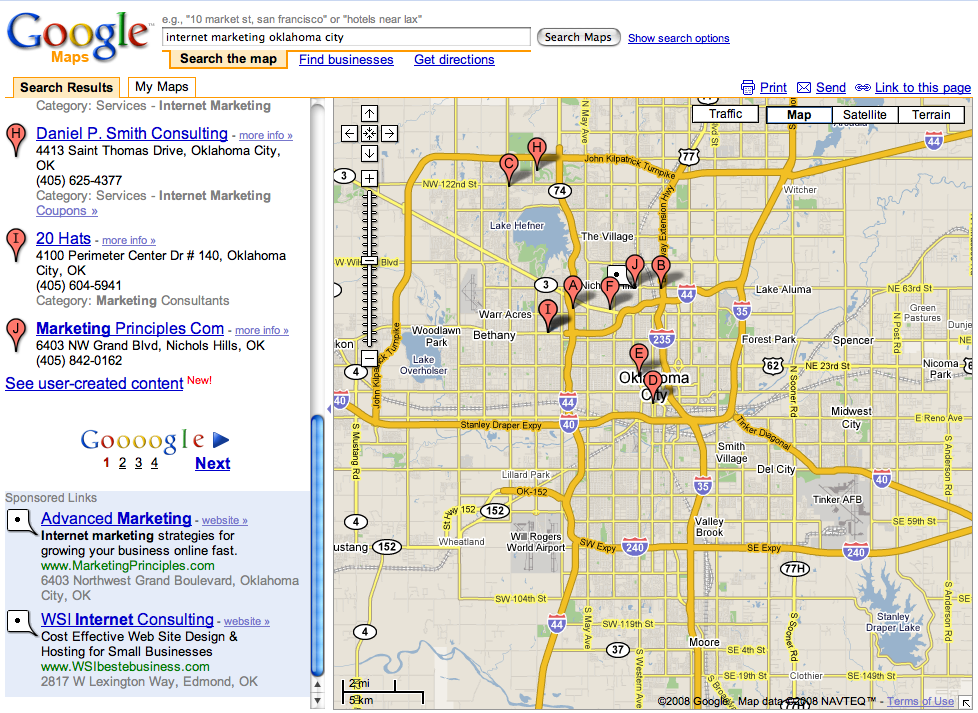
1. Google Maps User Created Content: User created content

Google Maps User created content Image 1

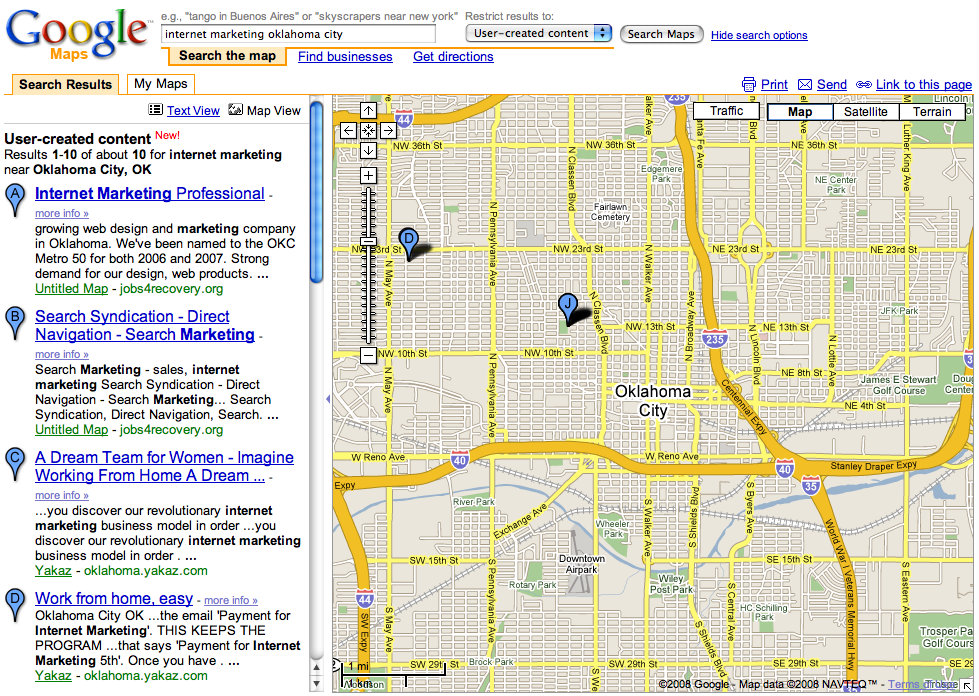
2. Google Maps User Created Content: User-created content Results 1-10

Google Maps User created content Image 2

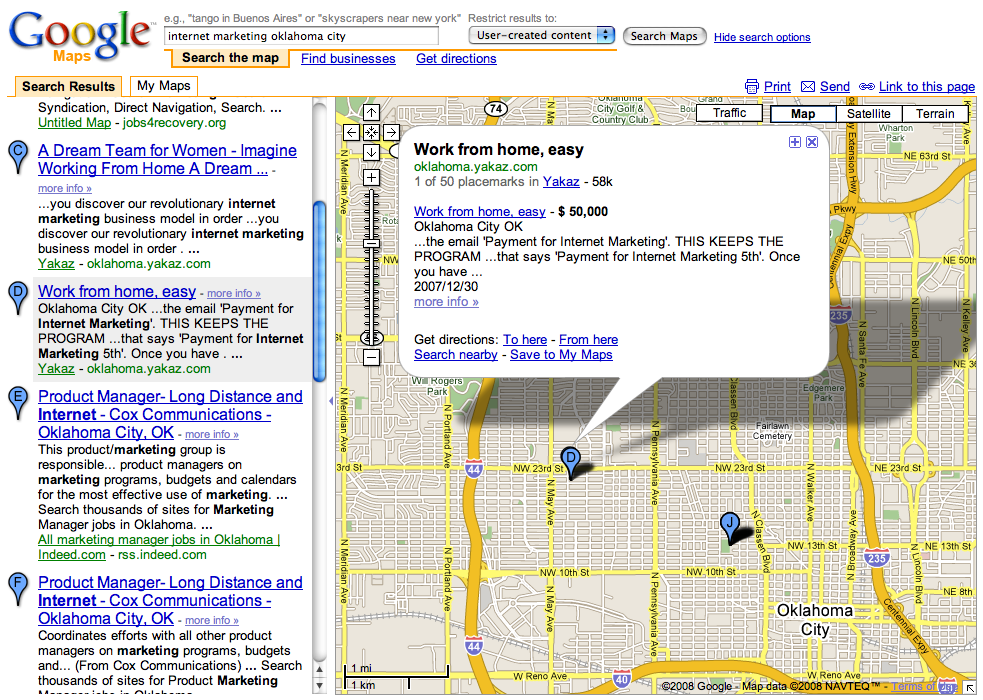
3. Google Maps User Created Content: D. “Work from home, easy…

“Work from home, easy… Oklahoma City OK …the email ‘Payment for Internet Marketing’. THIS KEEPS THE PROGRAM …that says ‘Payment for Internet Marketing 5th’. Once you have . …1 of 50 placemarks in Yakaz – oklahoma.yakaz.co”

Google Maps User created content Image 3

4. Google Maps User Created Content: “Displaying content from oklahoma.yakaz.com”

“The content overlaid onto this map is provided by a third party, and Google is not responsible for it.”

Google Maps User created content Image 4

IBM + Yahoo! (IBMY!) An alternative to Microhoo?

February 25, 2008

Could Yahoo! find its White Knight in IBM?

IBM

Yahoo

Since it now seems highly unlikely a bolted together advertising partnership with Google, News Corp. or AOL will materialize and dissuade Microsoft from its proposed takeover of Yahoo!, shouldn’t Yahoo! be looking outside the search box for possible solutions?

An IBM+Yahoo! or IBMY! combination makes as much sense as a MicroHoo.

Short of something as crazy as Yahoo! partnering with IBM, Yahoo will soon be otherwise assimilated by Microsoft.

I am sure there are millions even billions of reasons why IBM shouldn’t even consider it, but there only has to be one “good enough” financial reason for Yahoo! to justify its seeking and getting either IBM’s defensive or offensive investment at this their defining and possibly Yahoo’s final moment in time.

I wonder which particular financial reason would be compelling enough for both IBM and Yahoo to seek each other’s company now – if there is any at all?

The Power of Obvious: Obviously Useless or Obviously Useful

February 20, 2008

BusinessWeek.com interviewed me about new product marketing several years ago.

Because I also own NewProductMarketing.com, I regularly get emails and calls from new product developers looking for help marketing their new products.

A wide variety of new inventions have made their way across my desk. Some are still just an idea in their inventor’s mind while others have seen the light of day in the form of models and even working prototypes.

Eventually only a small percentage of these new inventors and their inventions commit to actually putting their money where their mouth is beyond tying up any potential intellectual property rights they may or may not be entitled to – a subject by the way – which could populate an entirely different blog.

When an “inventor” has reached this level of commitment i.e., manufactures a minimum production run of their product either locally or in China, they predictably then produce two new problems.

One is a “good problem” the other is a “bad problem.”

The good problem is that their product is an instant success and they can’t build enough of them to satisfy demand. I don’t ever get calls from these types of inventors!

Even after nearly twenty years consulting, I am not so sure they exist.

Instead, I get calls from inventors with the “bad problem”, a problem which falls somewhere on the following continuum. Mr. Inventor has just sunk his lifesavings or mortgaged his house to pay a manufacturer to build the first production run of his new product.

Mr. Inventor calls me because he realizes he needs to sell the 5,000 new widgets he just bought and paid for and he needs to sell them fast!

It is here where Mr. Inventor comes to grips with the fact that his belief in his invention does not necessarily translate into the market’s belief in the commercial viability or value of his invention.

For inventions that have reached this enviable position, I have again determined they fall into two categories. Inherent in both is a degree of obviousness although not the obviousness germane to patent law.

Mr. Inventor’s invention is either “obviously useless” or it is “obviously useful.” Both of which are determined in the commercial marketplace.

Granted, obviously useless products are available for sale but more often than not it is a product’s obvious usefulness that sustains its presence in a marketplace.

Discerning which products will be commercial successes from those that won’t ought to be a science.

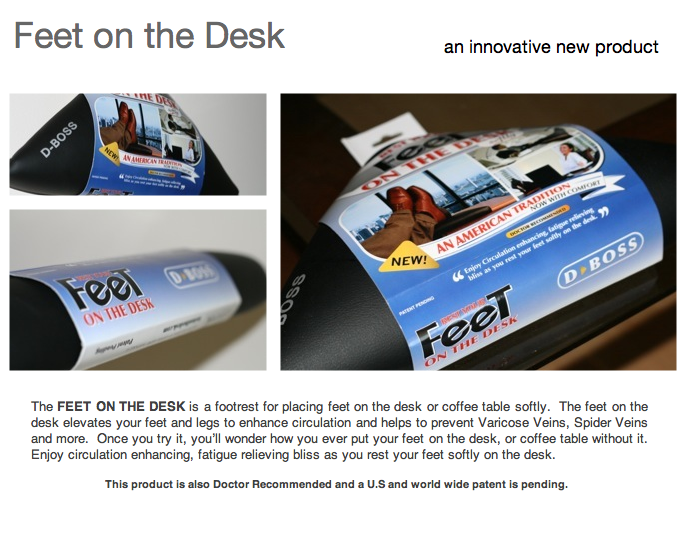
Consider the new product called “Feet on the Desk” which crossed my desk today.

Feet on the Desk

Gary the inventor called me today to ask for help selling all the units he just had delivered from China.

I don’t know which of the above “obvious” categories his product fits in but I told him he should call the “Relax The Back” chain.

He hadn’t ever heard of the company.

Whether he makes the call or not is up to him. It will be interesting to learn if in a year from now Gary’s new product is on store shelves or if it has ended up like thousands of other new products – shelved and gathering dust in its inventor’s garage.

In the end, only buyers in the market or the absence thereof will ultimately tell us whether this new product – Feet on the Desk – was Obviously Useless or Obviously Useful.

Feet on the Desk Product Description:

“The FEET ON THE DESK is a footrest for placing feet on the desk or coffee table softly. The feet on the desk elevates your feet and legs to enhance circulation and helps to prevent Varicose Veins, Spider Veins and more. Once you try it, you’ll wonder how you ever put your feet on the desk, or coffee table without it. Enjoy circulation enhancing, fatigue relieving bliss as you rest your feet softly on the desk.

This product is also Doctor Recommended and a U.S and world wide patent is pending.’

Innovate Like Edison

February 20, 2008

The recent book Innovate Like Edison by Michael Geb and Sarah Caldicott provides an excellent schematic to both individuals and businesses looking for a systematic approach to innovation.

Thomas Edison is without question the greatest inventor in American history. Edison generated 1,093 United States and 1,293 international patents over a 62 year period.

Many of his innovations have become multi-billion worldwide industries.

Edison established General Electric and a world first: General Electric’s industrial research laboratory. In doing so, GE pioneered the lighting, movie, phonograph, cement and battery industries.

According to Peter Drucker, “Every organization – not just business – needs one core competence: innovation.”

What other more powerful means exists for differentiating yourself or your business from the rest than through innovation?

Caldicott is a great-grandniece of Thomas Edison.

Edison’s had Five Competencies for innovation:

1. Have a solution-centric mindset

2. Use “kaleidoscope” thinking

3. Engage full spectrum engagement

4. Develop and harness a mastermind collaboration

5. Focus intensely on creating value

Each of his five competencies has an additional five performance benchmarks.

Through their book, Geb and Caldicott show how Edison may have been an even greater innovator of procedures than products by delineating what steps Edison took to produce innovation.